Rusted TMT bars are a common concern on construction sites, and many builders often question whether they can still be used safely. Steel, when exposed to air and moisture, naturally develops rust over time. However, not all rust is harmful. The key lies in understanding the difference between light surface rust and severe corrosion, as each has a very different impact on structural performance. Making the wrong decision at this stage can affect both safety and durability, so it is important to evaluate rusted TMT bars carefully before use.
Understanding Rust Formation on TMT Bars
Rust forms when steel reacts with oxygen and moisture, creating a layer of iron oxide on the surface. In construction environments, this is quite common due to exposure to weather conditions. When dealing with rusted TMT bars, it is important to assess how deep the corrosion has penetrated. Surface-level rust is usually limited to the outer layer, while deeper corrosion can affect the internal strength of the bar. The extent of this reaction determines whether the steel is still usable or should be rejected.
Light Rust vs Heavy Corrosion
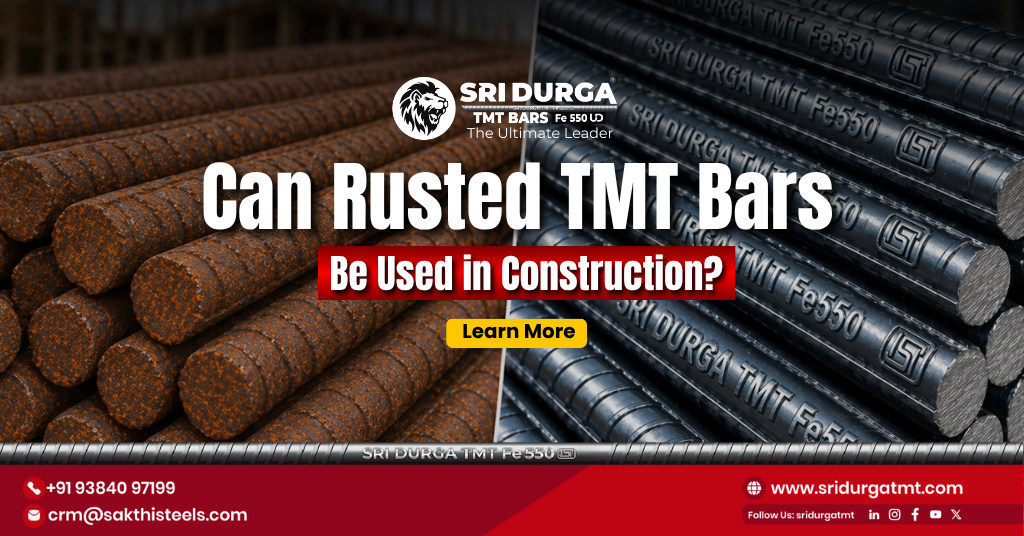
Not all rusted steel is unsafe. Light rust, often seen as a thin, even coating on the surface, does not significantly reduce the strength of the bar. In fact, in some cases, it can even improve the bond between steel and concrete, helping the reinforcement grip better within the structure.
However, heavy corrosion is a serious issue. When rusted TMT bars show flaking, scaling, or visible pitting, it indicates material loss. This reduces the cross-sectional area of the steel, directly affecting its load-bearing capacity. Such bars become weak and unreliable, making them unsuitable for construction.
Impact on Structural Strength
The strength of reinforcement steel depends largely on its cross-sectional area and internal integrity. When corrosion eats away at the steel, it weakens its ability to handle stress and load. Using heavily rusted TMT bars can lead to reduced tensile strength, making the structure more vulnerable to cracks and failure over time. This is especially critical in load-bearing elements such as columns and beams, where even minor weaknesses can have serious consequences.
When Can Rusted TMT Bars Be Used?
Rusted TMT bars can be used only if the rust is light and does not affect the bar’s dimensions or strength. Before use, the bars should be cleaned to remove loose rust, dust, or scale. Visual inspection and basic checks like weight and diameter measurement help ensure that the steel still meets required standards.
If there is any doubt regarding the condition of rusted TMT bars, it is always safer to reject them rather than risk structural safety. In professional construction practices, quality checks are never compromised.
Prevention of Rust on Construction Sites
Preventing rust is always better than dealing with its consequences. Proper storage plays a crucial role in maintaining steel quality. TMT bars should be stored on raised platforms, covered with sheets, and protected from direct exposure to rain and moisture. Good site practices ensure that rusted TMT bars do not become a frequent issue, maintaining the quality of materials used in construction.
Why Sri Durga TMT Bars Resist Rust Better
Sri Durga TMT bars are manufactured using advanced technology that enhances their resistance to corrosion. The bars undergo a controlled thermo-mechanical treatment process, which creates a tough outer layer and a strong inner core. This structure helps protect the steel from environmental exposure such as moisture and oxygen, which are the main causes of rust formation.
In addition, Sri Durga TMT bars are produced with high-quality raw materials and strict quality control standards. This ensures minimal impurities in the steel, reducing the chances of early oxidation. Their superior rib design also helps in better bonding with concrete, which further protects the steel from external elements over time.
Because of these properties, Sri Durga TMT bars are less prone to rusting compared to ordinary steel, making them a reliable choice for long-lasting construction.
How Sri Durga TMT Ensures Long-Term Durability
Durability is a key factor in construction, and Sri Durga TMT bars are designed to perform well even in challenging conditions. Their corrosion-resistant properties make them suitable for areas with high humidity, coastal regions, and environments exposed to varying weather conditions.
The consistent quality of Sri Durga TMT bars ensures that builders do not have to frequently deal with issues like rusted TMT bars on-site. This not only improves construction efficiency but also reduces maintenance costs in the long run.
By choosing Sri Durga TMT, builders can ensure stronger reinforcement, better structural life, and improved safety standards.
Conclusion
Rusted TMT bars can be used in construction only under certain conditions. Light surface rust is generally acceptable and does not compromise performance, but heavy corrosion can significantly weaken the steel and should be avoided. Proper inspection, handling, and storage are essential to ensure safety and durability.
Choosing high-quality steel from trusted sources minimizes such risks and ensures better long-term performance.
With Sri Durga TMT:
- Better resistance to rust and corrosion
- Consistent quality with fewer impurities
- Stronger bonding with concrete
- Suitable for long-term and coastal construction
- Reduced maintenance and repair costs
With Sri Durga TMT, you can build with confidence, knowing your structure is designed for strength, durability, and long-lasting safety.