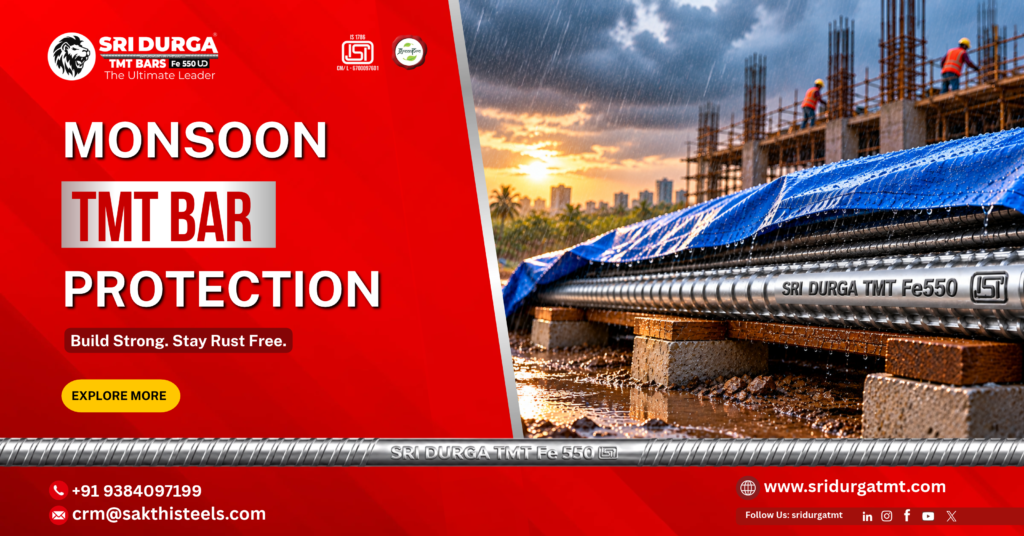
To protect TMT bars from rust during the Northeast Monsoon, store them on raised supports off the ground, cover them with a tarpaulin that allows airflow, use the oldest stock first, and clean off any loose rust before concreting. Light brown surface rust is normal and harmless, but flaky or pitted rust is not. Starting with the right steel also helps: Sri Durga TMT, India’s No.1 Green Steel TMT, is 5-star certified by the Ministry of Steel with 91.36% greenness, and its Fe 550 bars are made for Tamil Nadu’s coastal, rainy conditions.
Why the Northeast Monsoon Is Risky for Steel on Site
In Tamil Nadu, the Northeast Monsoon runs from October to December. Coastal districts like Chennai, Cuddalore, Nagapattinam and Chengalpattu get most of their yearly rainfall in these months, often along with cyclones. (Check daily forecasts on the IMD website.)
Three things cause rust on site:
- Water: rain, waterlogging and wet soil
- Humidity: bars stay damp for days
- Salt air: coastal wind carries salt that speeds up rust
Rain alone won’t ruin TMT bars. Poor storage and long delays before concreting are what cause the damage.
How to Store TMT Bars on Site (10 Simple Tips)
Storage
- Raise the bars off the ground. Use wooden sleepers, concrete blocks or a platform at least 150–200 mm above the soil.
- Pick high ground. Store on a slightly raised, well-drained part of the plot, away from where rainwater collects.
- Separate by size. Keep 8mm, 10mm, 12mm and other sizes in separate stacks so you don’t move wet bars around searching for one size.
Covering
- Cover with tarpaulin. Protect the bars from direct rain.
- Don’t wrap them airtight. Leave the sides slightly open so air can move. Fully sealed plastic traps moisture and causes more rust.
- Tie the cover down. Monsoon winds and cyclones can blow tarps away overnight.
Site planning
- Buy in phases. Order steel for the next stage only (footing, columns, slab) instead of the whole house at once.
- Use first-in, first-out. Use the oldest bars first.
- Plan concreting between rain spells. Once bars are inside concrete, they’re protected. Don’t leave tied cages exposed for weeks.
- Keep the binding wire dry too. Store it indoors or in a covered box.
Surface Rust vs Harmful Rust: How to Tell
| Type | What It Looks Like | Safe to Use? |
| Light surface rust | Thin brown layer, wipes off with a cloth | ✅ Yes |
| Loose rust | Rust powder or flakes fall off when rubbed | ⚠️ Clean with a wire brush first |
| Heavy / pitted rust | Flakes, holes or pits; ribs look worn | ❌ No, ask your engineer |
Simple test: rub the bar with a dry cloth or wire brush. If the surface underneath is solid steel with clear ribs, it’s usable. If the ribs are eaten away, reject the bar.
For a detailed guide, read our blog: Can You Use Rusted TMT Bars?
Before and After Concreting
Before pouring concrete:
- Wire-brush off any loose rust, mud or oil
- Check that cover blocks are in place. The right concrete cover is the steel’s main shield against rust (your structural engineer will specify it; coastal sites need more cover)
- Don’t pour concrete during heavy rain
After pouring:
- Cover fresh concrete with a sheet if rain is expected
- Continue curing as normal; monsoon rain doesn’t replace proper curing
- Seal any exposed starter bars (column bars sticking out for the next floor) with a cover or cement slurry, as advised by your engineer
Rainy Season House Construction in Tamil Nadu: Quick Checklist
- Raised, drained storage area ready before steel arrives
- Tarpaulin + rope stocked on site
- Steel ordered in phases
- Concreting dates planned around the IMD forecast
- Cover blocks and wire brush on site
- Exposed starter bars protected
- Bars checked for rust before every pour
Best TMT Bars for the Rainy Season
Good site care matters most, but the steel you start with matters too. When choosing the best TMT bars for the rainy season, look for:
- BIS / IS 1786 certification
- A strong outer layer: TMT bars have a hard, tempered outer surface from the quenching process
- Controlled chemistry: low carbon and impurity levels
- A trusted plant close to you: shorter transport means less time in the rain
Sri Durga Fe 550 TMT bars tick every box:
- 570 N/mm² yield strength, 16% elongation, carbon 0.25% max
- BIS certified to IS 1786
- 5-star green steel (91.36% greenness, 0.19 t CO₂) from our Kancheepuram plant. Learn what this means in our Green Steel Star Rating guide
- Supplied fresh across Chennai, Kanchipuram, Chengalpattu and Tiruvallur, plus Coimbatore, Madurai, Trichy, Salem and all of Tamil Nadu
That’s why builders call Sri Durga one of the best TMT bars in Chennai and among the best TMT bars in Tamil Nadu. See our 5-star green steel TMT bars.
Building this monsoon? Find a Sri Durga dealer near you or contact us for today’s price.
Build strong. Build green. Build with Sri Durga TMT. 📞 +91 93840 97199 | 📧 crm@sakthisteels.com
Frequently Asked Questions
How do I protect TMT bars from rust during the monsoon?
Store them on raised supports at least 150–200 mm above the ground, cover them with a tarpaulin that allows air flow, use the oldest stock first and concrete them quickly.
Can I use TMT bars with light rust?
Yes. A thin brown surface layer that wipes off is harmless. Clean loose rust with a wire brush, and reject bars with flaking, pitting or worn ribs.
Is it safe to build a house during the Northeast Monsoon in Tamil Nadu?
Yes, with planning. Order steel in phases, store it properly, pour concrete between rain spells and protect fresh concrete and exposed bars.
Should I wrap TMT bars fully in plastic?
No. Airtight plastic traps moisture and can increase rust. Cover the top and leave the sides partly open for ventilation.
Which are the best TMT bars for the rainy season in Chennai?
Sri Durga Fe 550 TMT bars are among the best for Chennai’s monsoon: BIS certified, 5-star green steel and supplied fresh from the Kancheepuram plant.
Does concrete protect TMT bars from rust?
Yes. The right concrete cover, as specified by your structural engineer, is the main long-term shield against rust, especially at coastal sites.